New, Never Installed offers replacement and project value for buyers seeking an unused fixed-pitch propeller with clear manufacturer identification and documented storage history.
Accurate model terminology helps prevent confusion with visually similar propellers that may have different pitch, diameter, hub, or aircraft applications.
Whether described as a Sensenich Fixed-Pitch Propeller, Sensenich Aluminum Propeller, Fixed-Pitch Aluminum Propeller, or Aluminum Aircraft Propeller, the individual unit should receive professional inspection before installation.
A Lycoming O-320 Propeller may only be appropriate for selected engine and airframe combinations, even when the basic engine family appears compatible.
Clear terminology supports both search performance and responsible aviation-product presentation.
Why the Complete Propeller Designation Matters
Every digit, letter, dash, suffix, alteration stamp, and serial marking should be recorded because similar-looking propellers can have different applications or dimensional configurations.
Original packaging can support the product history but does not replace inspection of the actual propeller.
Evaluating an Unused Sensenich Propeller
An unused propeller may still develop coating damage, corrosion, moisture exposure, scratches, dents, contamination, or packaging-related abrasion.
The packaging should be examined for water stains, crushing, punctures, chemical odors, damaged supports, or signs that the blades contacted the container.
Matching Propeller Design to Aircraft Performance
A propeller suitable for one aircraft equipped with a Lycoming O-320 may not be appropriate for another aircraft using a different engine variant or airframe configuration.
The pitch configuration affects engine RPM, acceleration, climb characteristics, cruise behavior, and overall loading.
Benefits of Metal Propeller Blades
Even a new and never-installed propeller should be checked for handling marks, coating defects, scratches, dents, and environmental exposure.
Harsh cleaners, abrasive pads, unapproved polishing, and uncontrolled sanding should be avoided because they may damage the finish or alter blade surfaces.
Avoiding Unverified Propeller Size Claims
Verified dimensions support correct replacement-propeller selection.
Diameter should be measured using an appropriate hub-center reference and complete tip-to-tip procedure.
Documenting the Propeller Configuration
Verified configuration helps buyers understand the intended application of the 60-Inch Pitch Propeller.
A never-installed propeller should still be reviewed for shipping distortion, impact, or manufacturing-record consistency.
Lycoming O-320 Propeller Compatibility
Compatibility depends on the exact aircraft model, serial range, engine designation, propeller approval, hub, bolt pattern, diameter, pitch, and operating limitations.
The mounting flange, pilot fit, bolt pattern, spacer arrangement, and spinner components should also match the receiving installation.
Inspecting the Complete Propeller Assembly
Both blades should maintain compatible dimensions, pitch relationship, contour, weight distribution, finish, and structural condition.
A never-installed propeller may still require static balance verification after extended storage check here or transportation.
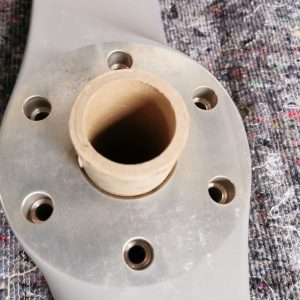
Evaluating Mounting Holes and Surfaces
A genuinely never-installed propeller should not show unexplained fretting, bolt loading, or flange-contact patterns.
The buyer should determine whether approved bolts, nuts, washers, bushings, spacers, spinner bulkheads, and related mounting components are included.
Identifying Storage and Handling Concerns
Professional evaluation protects the Sensenich Aircraft Propeller from unsuitable installation.
Suspicious areas should be examined carefully after the wrapping is removed using appropriate handling procedures.
Preserving an Unused Aircraft Propeller
Discoloration, white residue, paint bubbling, coating separation, staining, or pitting should be evaluated instead of dismissed automatically as cosmetic.
The propeller should not be stored directly on concrete floors, damp timber, unstable shelving, or unsupported blade tips.
Reviewing Propeller Release Documentation
The buyer should confirm the data plate, serial number, production information, conformity records, release documents, and exact approved aircraft application.
Installation eligibility depends on the exact aircraft, engine, configuration, approved data, and applicable maintenance requirements.
Propeller Traceability and Documentation
Conflicting or incomplete identification should be resolved before payment or installation.
Complete history supports future maintenance, installation research, and resale.
Evaluating a New Never-Installed Propeller
A pre-purchase review should confirm the complete model, serial number, diameter, pitch, blade count, hub configuration, mounting pattern, manufacturing information, storage history, physical condition, applicability, and documentation.
- Confirm P/N 74DM6-0-60, the complete serial number, manufacturer markings, 74-inch diameter, 60-inch pitch, blade count, hub dimensions, bolt pattern, and original configuration.
- Do not treat original packaging, clean paint, new wording, or never-installed status as proof of present serviceability.
- Report freight damage, missing documentation, identification differences, corrosion, finish defects, blade damage, or dimensional discrepancies promptly.
Safe Freight Handling Procedures
Moisture-resistant wrapping may be appropriate when it does not trap condensation against the aluminum.
The shipping crate should identify appropriate lifting and handling points so carriers do not use the propeller blades as handles.
Preventing Corrosion and Handling Damage
Storage supports should avoid concentrating weight on blade tips, edges, or thin blade surfaces.
Periodic inspection can identify developing corrosion, packaging damage, coating defects, or mishandling.
Mounting the Replacement Aircraft Propeller
The engine flange, pilot fit, mounting surfaces, threads, bolt holes, and related components should be inspected before assembly.
Blade tracking should be evaluated after mounting.
Initial ground operation should monitor vibration, RPM, unusual noise, mounting security, spinner behavior, and other abnormal indications.
Preventive Blade and Hub Inspection
Consistent maintenance protects the Sensenich Fixed-Pitch Propeller.
Pilots and operators should report new vibration, visible blade damage, unusual noise, or performance changes promptly.
Evaluating Never-Installed Propeller Pricing
Original packaging can improve presentation and provenance but does not replace physical examination.
Availability of qualified maintenance support and approved installation data can influence long-term ownership value.
New, Never Installed
For a properly approved aircraft-and-engine combination, the propeller can support a professional installation project when inspected and mounted by qualified personnel.
The unit should not be judged solely through original packaging, clean factory paint, new wording, never-installed status, or purchase price.
Whether the product is described as a 74-Inch Aircraft Propeller, 60-Inch Pitch Propeller, Lycoming O-320 Propeller, or General Aviation Propeller, aircraft-specific applicability remains essential.
New, Never Installed can deliver a professional combination of fixed-pitch simplicity, aluminum construction, replacement value, and general aviation application potential.